
The claim, with no windup
If there was a conference in your market three months ago, we can still advertise to the people who attended it.
Not people like them. Not a lookalike audience built off an interest category. The actual devices that were physically inside that building on those days.
You didn't need to know about the event in advance. You didn't need a campaign running. The event happened, it's over, everybody went home, and the audience is still reachable.
How it works
The device data exists whether or not anyone was advertising against it at the time. Location history is generated constantly by ordinary phone use. Historical geofencing goes back and pulls the device IDs that were inside a boundary during a window that's already passed.
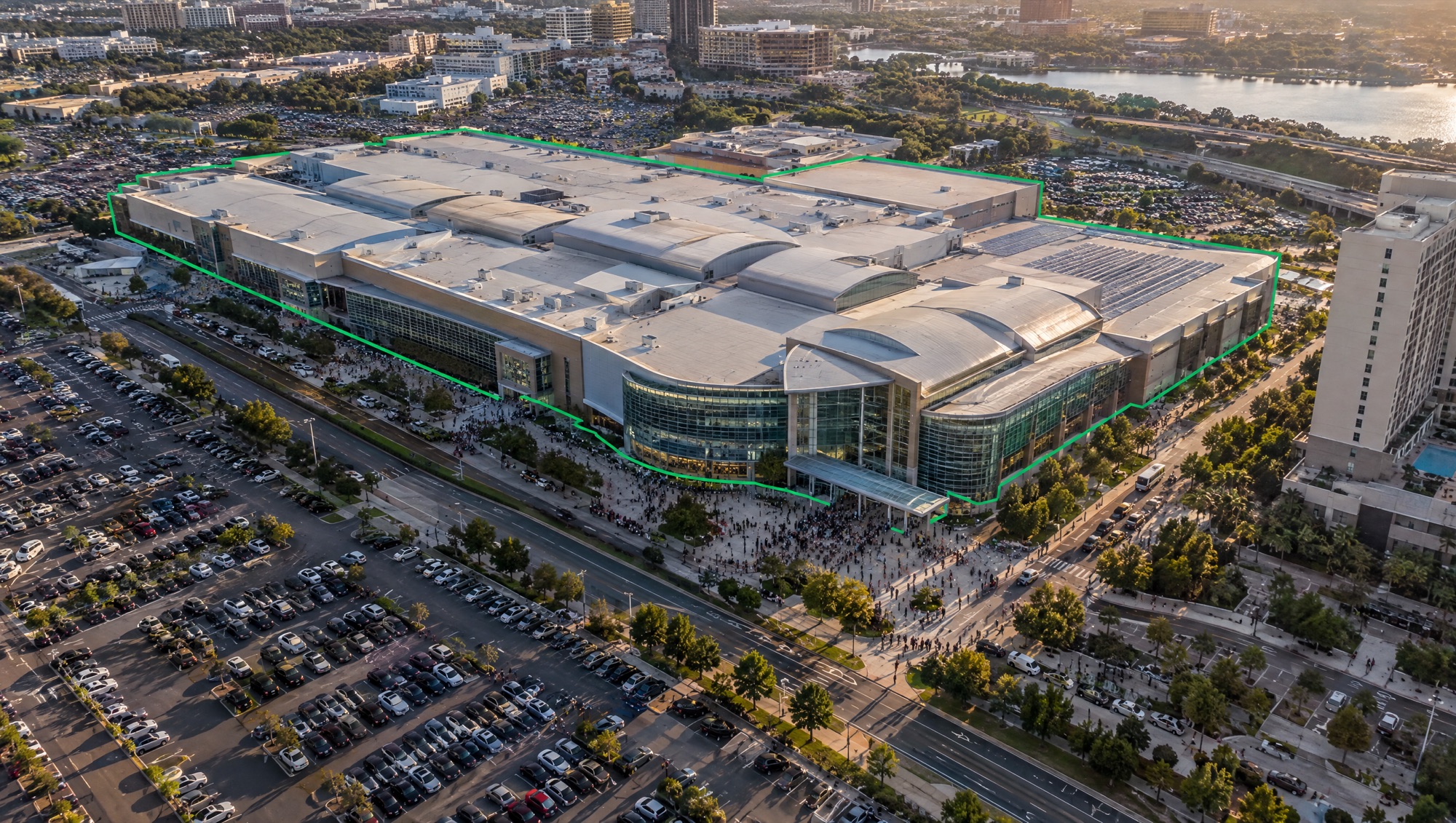
We draw the fence around the venue the same way we would for a live campaign, shaped by hand around the actual building rather than a radius that would pull in the hotel next door and the highway out front. Then we set the date range. Then we've got the audience.
From there it behaves like any other geofenced audience. Display, video, and social, for the length of the campaign. A trade show that ended in June can be running as a social audience in September, pointed at the same people who walked the floor.
That last part is worth sitting with. The audience isn't stuck in display ads. An event audience can show up on Facebook, Instagram, and LinkedIn, which is usually where somebody who attended a professional event is easiest to reach afterward.
What's worth fencing after the fact
The highest-value version of this. Everyone in the building already self-selected into your category by showing up. For a B2B business it's close to a purchased list, except nobody had to opt into anything and you're reaching devices rather than inboxes.
Anyone who turned out for it is in-market for what that business sells.
Useful when your customer base is local and attendance maps to the demographic you want.
A stadium on a game day is tens of thousands of devices in one polygon.
This is the one people miss. You don't have to have been there. If your buyers were in that room, the room is fenceable.
A worked example
A regional B2B company misses the industry conference in their market. No booth, no budget for it, competitors all there.
The conference runs three days across one convention center. We fence the building, set the window to those three days, and pull the devices. Say that forecasts at 4,000 unique devices.
At 40 impressions each, that's 160,000 impressions. At $9 per thousand, about $1,440 for a month of display against an audience made up entirely of people who spent three days thinking about your industry. Add social against the same audience and you're reaching them on Instagram and LinkedIn in the weeks when the conference conversations are still fresh.
That's a fraction of what the booth would have cost.
Where it stops working
Ninety days is the honest window.
The data does exist beyond that, and I could technically reach back further. But it thins out enough past three months that I won't build a campaign on it, because a thin audience produces a thin result and you're the one paying for it.
A few other limits worth naming.
The event has to have been dense. A three-day conference in one building is ideal. A festival spread across an open downtown, where the fence has to cover public streets, captures a lot of people who were just walking through.
Recency still matters inside the window. Thirty days out is stronger than eighty-five days out. If you've got the choice, move sooner.
The creative has to make sense. An ad that says "thanks for visiting our booth" to a person who never visited your booth is a bad look. Speak to the category, not to the room.
How to decide whether a past event is worth fencing
Three questions.
- Were the attendees self-selected into your category? A trade show for your exact industry is a yes. A county fair is a maybe.
- Was the venue tight enough to fence cleanly? One building beats an open-air area.
- Is it inside 90 days? If it's at day 85, run it this week.
If all three are yes, the event is worth fencing, and the device forecast will tell you how big the opportunity is before you spend anything.

Is there an event in your market still inside the window?
There's probably one right now, and I'll check. About 15 minutes, no pitch, and the strategy deck is yours either way.