
Geofencing advertising that reaches people based on where their phone has actually been.
Canopy is a geofencing company. We put a boundary around a real place and advertise to the phones that go there. A competitor's parking lot. A conference two months ago. A list of home addresses. No guessing at an age range, and no budget going to people who were never going to buy.
Got it! Finish picking a time in the Calendly tab that just opened. Bobby will confirm by email.
Free, about 15 minutes, and there's no sales pitch. You'll get a strategy deck with real research on your market either way, including if you decide geofencing isn't for you.
What geofencing is, and how it actually works
Canopy Ad Co is a geofencing agency founded in 2017 by Bobby Youngs, who has worked in geofencing since 2012.
Geofencing is a form of digital advertising that targets people based on their physical location. An advertiser draws a virtual boundary around a real place. A building, a parking lot, a neighborhood, or a list of addresses, and captures the anonymized mobile device IDs of the phones that enter it. Those devices can then be served display, video, and social media ads for the length of the campaign.
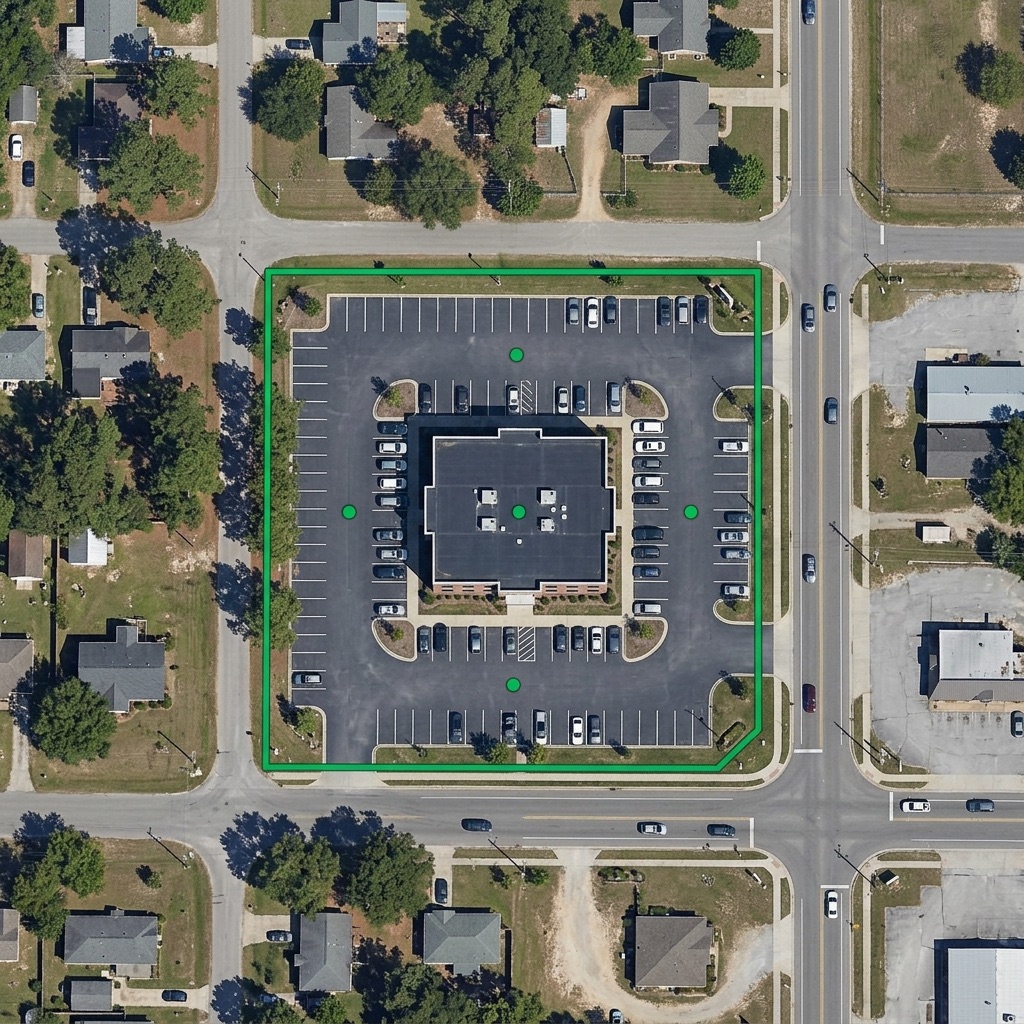

Places you already know

The hospital across town
The competitor down the road
The trade show in March
You know where your customers go. Your advertising doesn't.
Most digital advertising works backward from a guess. You pick an age range, an income bracket, and hope the platform hands you the right people. Then you pay to reach all of them, including everyone who was never going to buy.
You already know something better than that. You know the places your customers physically show up. Your best customers aren't hidden. They're standing somewhere specific, and that's a targetable fact.
Geofencing starts there instead. Same ads, pointed at people you know are real, which means less of your budget spent on people who aren't.
This used to be something only big companies could do
Most people's first reaction to geofencing is some version of wait, you can do that? It sounds like something a national brand with a data team and a seven-figure budget would be running. For a long time, that was true.
It isn't anymore. The same targeting is available to a one-location business that's available to a hundred-location one. What hasn't changed is that somebody has to know how to build it, and that's the part you're actually hiring me for.
And to answer the question that comes right after: yes, it's legal. We work with anonymized device IDs. No names, no phone numbers, no personally identifiable information about any individual. There are real rules about how location and device data can be used, and campaigns are built to stay inside them.

The thing you keep in your back pocket
Most of my clients already have an agency, or handle marketing in-house. I'm not replacing that. I'm the specialist they bring in for this one piece.
How geofencing works

You tell us the place
An address, a building, a neighborhood, an event venue. If it's on a map, we can put a fence around it.

We capture the devices
Every phone that crosses that line gets an anonymized device ID added to your audience. No names, no personal information.
Your ads follow those people
Display, video, and social, for the length of the campaign, on whatever device that person picks up next.
That's the whole thing. It's not complicated, and it isn't new. It's just not something most of your competitors have gotten around to using.
Three things most people don't know geofencing can do
We can go back 90 days
If a conference happened in your market two months ago, we can still reach the people who attended. We pull device IDs from a location retroactively. A trade show, a competitor's grand opening, a hospital parking lot on a Tuesday in June.
We can target individual households
Addressable geofencing puts a fence around specific street addresses instead of a general radius. Say you've got a list of 2,000 homes. We advertise to those 2,000 homes, and not to the 40,000 around them. The same household gets the postcard and sees the ad.
The audience isn't stuck in display ads
This is the one that surprises people most. Once we've captured an audience from a physical location, we can use it on social media too. It means an audience you own and can reach across channels.
Curious what's actually fenceable in your market?
Schedule a Discovery CallWho does geofencing work for?
If your customers go somewhere in person, this works. I don't specialize in one industry. I specialize in geofencing, and it's been pointed at just about everything. Here's where it comes up most.
Senior living and memory care
Reach the adult children in the households most likely to be making the decision. It's one of the longest-running use cases I have.
Recruiting and hiring
Fence the facilities, campuses, and job sites where the people you want to hire already spend their day.
Multifamily and property management
Fence competing properties, employer campuses, and university housing during lease-up.
Healthcare practices
Chiropractic, dental, physical therapy, med spa. Fence the practices, gyms, and employers your ideal patient already visits.
Home and trade services
Fence a storm-damaged zip code, a new development, or a competitor's service area.
Events and B2B
Fence the conference your buyers attend, then keep reaching them after everyone's gone home.
In geofencing since 2012.
Geofencing is a line item on most agency service pages now. For me it's the whole business. Programmatic display, geofencing, paid social, Google Ads. That's it. There's no video department here to move you into, and there's no overhead you're quietly funding.
Canopy has been bigger than it is today. I've kept it deliberately lean, and the tradeoff is a good one for you: when you call, you get me, and most of what you spend goes to actual ad delivery.

You get me
Not an account coordinator. I take the first call, and I'm the one running your campaign.

I don't sell
I'm a consultant here, not a salesperson. You'll get the research and you'll decide. And if I don't think this is going to work for your situation, I'll tell you that instead of taking the work.
No contracts, no minimums
There's no minimum spend and no contract length. You control your budget month to month, and if you want to stop, it's paused within 24 hours. Clients stay because it's working, not because they signed something.

In geofencing since 2012
I've been working in this space since 2012, on the same platform for most of it. I only need about 15 minutes of conversation to start building your first targeting list.
Here's exactly what happens when you schedule
We talk for about 15 minutes
You tell me what you're trying to do. I ask where your customers physically go. There's no pitch. We're finding out whether this is the right medium for you.
I learn about your business directly from you
All of it, as far into the weeds as you want. If you just want to understand geofencing and never work with me, that's a fine outcome.
Within about three days, I send you a custom strategy deck
Real market research and real device counts for the locations you named: how many people we could actually reach, and where. It's built so you can hand it to a partner or a board without translating it first. Yours to keep whether we work together or not.
You decide how much of it to take on
The deck shows you the whole opportunity in your market. You pick how much of it you want to go after to start. No second call where somebody else joins to close you, and no follow-up sequence.
If you're in, we launch fast
Campaigns typically go live within 72 hours of approval.
Geofencing questions I get asked
What is geofencing in advertising?+
Geofencing in advertising is the practice of drawing a virtual boundary around a physical location and serving ads to the mobile devices that enter it. When a phone crosses the boundary, its anonymized device ID is added to a targetable audience. That audience can then be served display, video, and social ads for the length of the campaign.
Is geofencing legal?+
Yes. Geofencing advertising is legal in the United States. Canopy targets anonymized mobile device IDs rather than individuals: no names, phone numbers, or personally identifiable information are collected or used. Privacy regulations govern how location and device data can be used, including rules protecting minors, and campaigns are built to stay within them.
How do I target people who visit my competitor?+
Geofencing is how. Canopy draws a boundary around your competitor's location and builds an audience from the anonymized device IDs of the phones that enter it. Those devices can then be served your display, video, and social ads. It works for one location or for every location a competitor operates.
How accurate is geofencing?+
Geofencing accuracy depends on the targeting method. Standard geofencing works at the building or venue level. Addressable geofencing targets individual street addresses using property-level mapping, which is significantly more precise than a radius.
Can you target people who visited a location in the past?+
Canopy can retroactively pull mobile device IDs from a location for events that happened up to 90 days ago. If a trade show, grand opening, or community event happened in your market within the last three months, the people who attended are still reachable. Data does exist beyond 90 days, but it thins out enough that three months is the practical window.
How is geofencing different from Google Ads?+
Google Ads reaches people who are actively searching for what you sell. Geofencing reaches people based on where they've physically been, whether or not they're searching. Most clients run both: search captures demand that already exists, geofencing creates it. Running display alongside search also tends to lift search performance. If you're not sure which one you need first, that's a good thing to work out on a call. Canopy runs both, so there's no wrong answer to steer you toward.
What does a geofencing campaign cost?+
Canopy has no minimum spend requirement and no contract. Management is billed as a percentage of media spend. What a campaign costs depends on how competitive your market is and how narrow the target area needs to be. Small budgets can work, though below a certain point the reach gets too thin to tell you anything useful, and I'll say so on the call rather than take the work. Your strategy deck includes real device counts for your market, so you'll see the size of the opportunity before you decide what to spend against it.
How soon can my campaign launch, and when will I see data?+
Your strategy deck takes about three days after our call. Once you approve a proposal, campaigns typically launch within 72 hours.
Do I need a website to run geofencing ads?+
A working website is required before a geofencing campaign can launch, because the ads have to send traffic somewhere. I'll tell you honestly whether your current site is ready.
What size business does Canopy work with?+
Everything from single-location businesses spending a few hundred dollars a month up through multi-location enterprise campaigns across 150-plus facilities. There's no minimum, and no business is too small to have the conversation.
Can geofenced audiences be used on social media?+
An audience captured through geofencing can be activated on social media platforms, not just programmatic display. This is one of the most common misconceptions about how geofencing works, and it's the thing people are most surprised to learn.
Still have a question? That's what the call is for.
I'll tell you if geofencing isn't right for you.
About 15 minutes, a real conversation about your market, and a strategy deck at the end of it. No sales pitch, no minimum spend, no contract. If geofencing isn't right for you, I'll say so on the call.
Schedule a Discovery CallBobby Youngs, Founder, Canopy Ad Co