
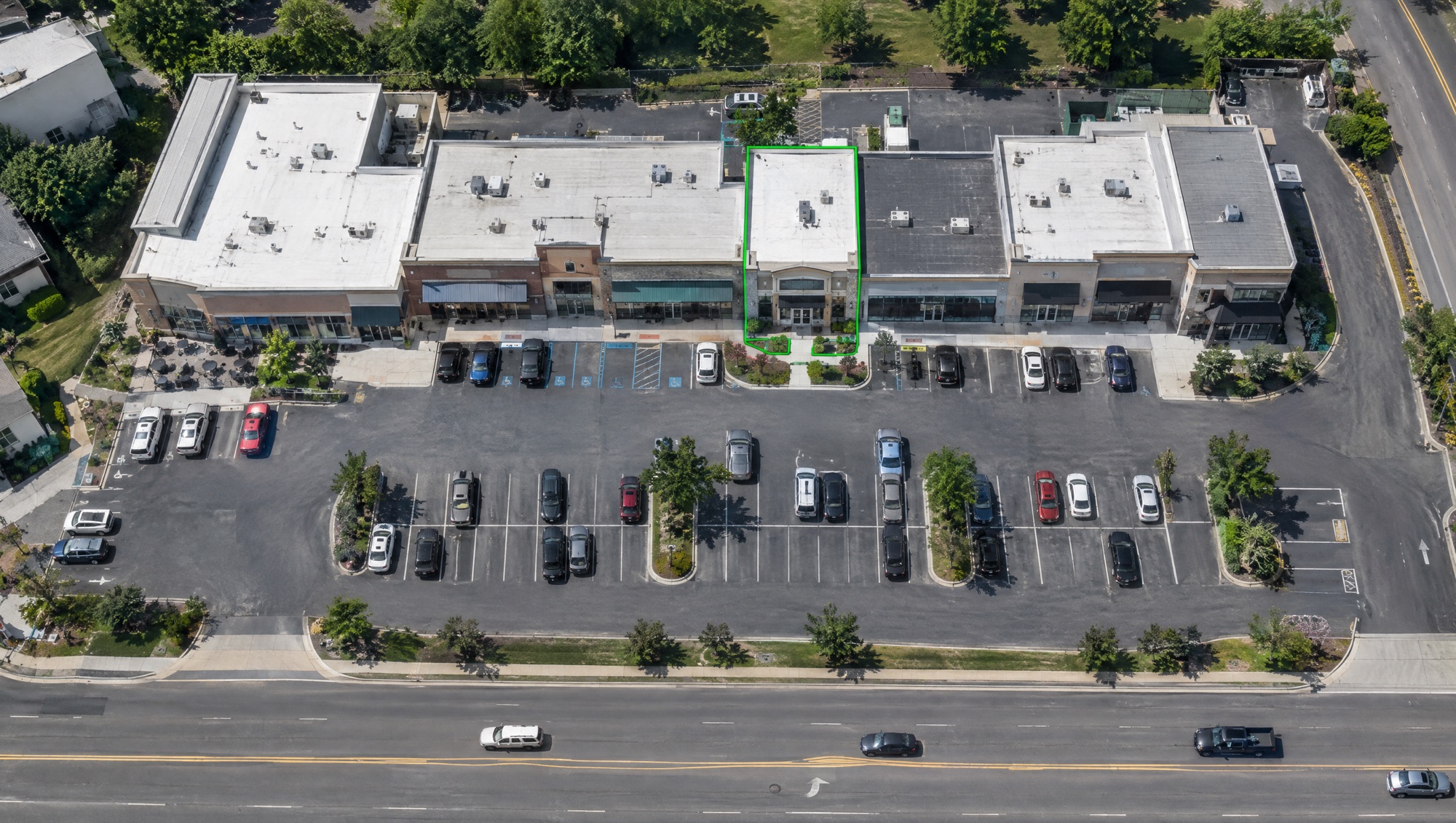
The premise
You can draw a fence around your competitor's building and advertise to the people who go inside it.
For a lot of retailers this is the single most exciting thing geofencing does, and it's usually the first question somebody asks once they understand the mechanic. It's also the easiest version to explain, because the value is obvious the second you hear it.
A real campaign
I worked with a diamond jewelry company based here in Charlotte. Thirty to forty locations across the Southeast. I won't use names.
The build was simple. In each of their markets, we fenced the top five competitor jewelry stores within a 10-mile radius of that location. Every market, the same logic, replicated. It was inexpensive to run, and it worked for a reason specific to how people buy jewelry.
Why it worked: intent is built into the visit
People don't browse jewelry stores for fun.
Some visits are repairs or cleanings, sure. But for the most part, walking into a jewelry store means something. You're buying, or you're close to buying, or somebody in your life has a date coming up.
And jewelry isn't an impulse purchase at any real price point. People shop it. They go store to store comparing pricing and inventory, figuring out who they want to deal with, and that process takes days or weeks. While somebody's doing that circuit, we're capturing their device at every competitor they walk into and serving them display ads for my client.
The intent wasn't inferred from browsing behavior or purchased as a data segment. It came from the fact that the person physically walked into a jewelry store.
That's the whole argument for conquesting. The location does the qualifying for you.
What the ads should and shouldn't say
The ads said "check us out." Straightforward responsive display for the client's brand.
What they didn't say, and should never say, is anything that reveals what you know. You don't tell somebody you know they were just at a competitor. You don't reference where they've been. You serve a good ad for your business to a person who happens to be shopping your category right now.
That matters for tone as much as for privacy. A well-targeted ad that behaves like a normal ad performs better than a clever one that makes somebody feel watched.
Conversion zones: the part that surprised the client
Alongside the competitor fences, we put a conversion zone around my client's own locations.
A conversion zone tracks devices we've seen in a fence that later show up at a location you specify. So we could see how many devices we observed at a competitor's store subsequently walked into my client's store. That includes devices we never served an ad to, which means the measurement isn't limited to people the campaign touched.
Two things came out of it.
We could show real foot traffic from competitor locations into client locations, which is far better proof of a retail campaign than a click-through rate. More on measuring geofencing properly.
This was the unexpected one. Across thirty-some markets, the conversion zone data showed how popular each of my client's locations was relative to the competitors around it. Which stores pulled traffic from competitors and which lost it. Where the shopping circuit actually ran in each city.
That's primary market research produced as a byproduct of an ad campaign, and no survey would have gotten it as cheaply or as honestly.
How to pick which competitors to fence
- Proximity matters, but not the way you think. Ten miles worked for jewelry because people will drive that far to compare. For a coffee shop, ten miles is meaningless. Match the radius to how far people actually travel for what you sell.
- Fence the ones people cross-shop. The direct competitor two exits away is worth more than the biggest name in the state if nobody shops both.
- Top five per location is usually the right shape. Enough volume to matter, tight enough that the audience stays qualified.
- Watch the parking lots. This is where conquesting campaigns quietly break. A competitor inside a strip mall shares a lot with six other businesses, and a loose fence captures everybody who bought groceries. Those devices cost the same as real prospects and tell you nothing. This is the most common reason a geofencing campaign underperforms.
Is this allowed?
Yes. Conquesting is legal, it's standard practice, and it isn't new.
The mechanics are what make it fine. We work with anonymized mobile device IDs. No names, no phone numbers, no personally identifiable information about any individual. We know a device was at a location. We don't know whose it is. Nobody at Canopy, and nobody at your company, ever learns the identity of a single person in that audience.
There are real rules governing how location and device data can be used, and campaigns are built to stay inside them.
If it helps to frame it: your competitor is allowed to advertise on the billboard outside your store. This is the same idea, aimed better.
What a realistic result looks like
Conquesting doesn't convert like a bottom-of-funnel search campaign, and anybody promising that is selling you something. What it does is put you in front of people at the exact moment they're shopping your category, at a cost per thousand that makes repetition affordable.
For a considered purchase with a real shopping window, jewelry, furniture, cars, home services, that window is where the decision gets made. Being present in it four or five times while somebody is actively comparing is worth more than almost any other moment you can buy.
And if you set up conversion zones at the start, you'll know whether it happened.

Which competitor locations are worth fencing?
I'll pull device counts for the ones in your market. About 15 minutes, no pitch.